Clipcrate Plywood.
High Quality, Competitively Priced Plywood
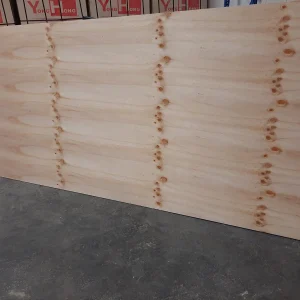
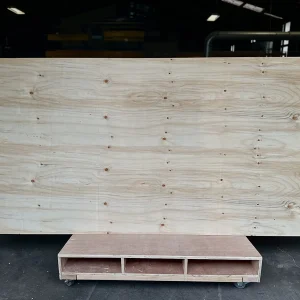
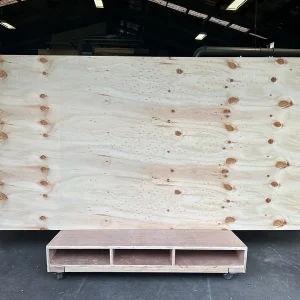
CDX grade pine plywood bonded with waterproof melamine glue (often a melamine-urea-formaldehyde or MUF variant, or sometimes full melamine resin in WBP formulations) is a popular, cost-effective structural panel, especially in construction, shipping crates (Clipcrate), formwork, and outdoor-exposed applications in NZ’s variable climate.
CDX stands for:
- C — Face veneer grade (allowable knots, plugs, minor defects; not sanded smooth for appearance).
- D — Back veneer grade (more imperfections, larger knots/holes up to ~2.5 inches).
- X — Exterior/exposure-grade adhesive (water-resistant glue that prevents delamination when wet).
Thickness-Specific Notes
- 9mm — Best for lightweight applications (e.g., crate sides/lids, non-load-bearing panels); prioritizes low weight + cost while maintaining moisture resistance.
- 12mm — Versatile “Goldilocks” thickness for many crates/sheathing; balances strength, weight, and price.
- 18mm — Heavy-duty choice for bases, floors, or high-load crates; maximizes durability and load capacity.
Limitations to Note
- Not for permanent full-weather exposure or immersion (use marine plywood or treated alternatives there).
- Surface imperfections (knots, voids) mean it’s structural/hidden-use focused—not pretty for visible finishes.
- Seal edges/treat for extended outdoor life in NZ conditions.
Shop Now!
Key Advantages of CDX Pine Plywood with Waterproof Melamine Glue
These benefits shine across **9mm**, **12mm**, and **18mm** thicknesses, with differences mainly in structural capacity, weight, and application fit:
- Excellent Moisture Resistance & Durability
The melamine-based glue (water-resistant/ boil-proof) ensures the plies stay bonded even with intermittent wetting, rain exposure during construction, high humidity, or occasional dampness.
- Layers won’t delaminate easily (unlike interior-grade urea-formaldehyde glues).
- Better than standard glues in NZ’s wet winters or coastal areas.
- Not fully waterproof (wood itself absorbs moisture → can swell/warp if constantly soaked), but superior for short-term exposure vs. non-“X” plywood.
- Strong Structural Performance & Load-Bearing
Cross-laminated pine veneers + melamine glue create high shear strength, stiffness, and dimensional stability.
- 18mm: Ideal for heavy-duty uses like subflooring, roofing sheathing, wall bracing, crate bases, or shelving—handles 1000+ kg loads depending on span/support.
- 12mm: Balanced for general sheathing, formwork, or medium crates—good strength-to-weight.
- 9mm: Lighter option (e.g., your Clipcrate Lites) for weight-sensitive shipping/storage—still robust for transit protection without excess mass.
- Pine’s natural resilience + glue strength resists impacts, warping, and twisting better than many hardwoods in structural roles.
- Cost-Effective & Economical
Lower-grade veneers (C/D) keep material costs down compared to BCX, ABX, or marine plywood—often the cheapest exterior-grade option.
- Great for large-scale projects, packaging (e.g., reusable crates), or budget builds where appearance isn’t critical (hidden/sheathing use).
- Long-term savings from reduced damage claims, reusability, and no need for frequent replacements.
- Lightweight Yet Stable (Especially Pine)
Pine is lighter than many alternatives (e.g., vs. hardwood plywood), reducing freight/handling costs—key for your shipping crates.
- Good screw/nail holding without splitting.
- Stable across temperature/humidity changes (less expansion/contraction than solid timber).
- Versatile & Readily Available
Stocked widely in Auckland and Wellington (e.g., 1220x2440mm sheets).
- Suited for: Construction sheathing, subfloors, crates/pallets, temporary formwork, signage, or export packaging (ISPM15 Compliant).
- Melamine glue adds low-formaldehyde options in some formulations (better indoor air quality vs. high-urea types).
- Reusability & Sustainability Edge
With strong melamine bonds + pine’s renewability, it’s durable for multiple cycles (e.g., in crates like Clipcrate—collapsible, returnable).
- Reduces waste vs. single-use packaging.